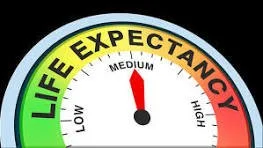
While researching a blog post on Social Security, I came across a term with which I was unfamiliar. “Healthy Life Expectancy” is the average number of years a person can expect to live in “full health,” without significant disease or disability. It differs from total life expectancy by focusing on the quality of life rather than just the duration, accounting for years lived with illness. Sometimes it is referred to as Healthy Life Years (HLY) or Healthy Life Expectancy (HALE).
In the United States a typical 65-year-old has a total life expectancy of 18-21 years, but a healthy life expectancy of only 13-14 years. While total life expectancy is important, few of us want to live a long time if we are bedridden or disabled to such an extent that we are unable to function independently.
There are three key factors that can increase your healthy life expectancy.
A. Factor One: Life Style Behaviors
Never Smoke. Abstaining from smoking is one of the most important behaviors for increasing healthy life expectancy.
Regular Physical Activity. Regular moderate-to-vigorous exercise improves cardiovascular health, boosts mood, and prevents frailty.
Good Dietary Habits. A high-quality diet containing vegetables, fruits, nuts, whole grains, and healthy oils reduces chronic disease risk.
Control Body Weight. Keeping calories under control and maintaining a healthy body mass index (BMI) lowers the risk of diabetes, heart disease, and cancer.
Limit Alcohol Intake. Limiting or avoiding alcohol is considered an important way to increase healthy life expectancy.
Get Enough Sleep. Generally speaking, you want to get as close to 7-8 hours of sleep as possible. Anything less than 6 hours can have negative health effects.
B. Factor Two: Social Determinants of Health
High Socioeconomic Status. Higher education and higher income are highly correlated with living a longer and healthier life.
Access to Healthcare. Having access to preventative services like screenings and vaccinations are correlated with a healthier life.
Safe Environment. Having access to a safe environment free from violence leads to opportunities for physical activity.
C. Factor Three: Biological/Genetic Factors
Genetics. Approximately 25% of the variation in lifespan is attributed to genes inherited from parents.
Family History. Individuals whose parents lived a long and healthy life are more likely to live longer and remain healthier.
Sex. Women usually have a higher healthy life expectancy than men.
Predicting Healthy Life Expectancy
There are several Healthy Life Expectancy calculators available online to help you determine both your overall life expectancy and your healthy life expectancy. The best one I found that takes into account many of the factors discussed above is the University of Connecticut’s Healthy Life Expectancy Calculator. This calculator asks for personal information (gender, age, weight, and height), socioeconomic information (education level and income), fitness information (amount of weekly exercise, self-perceived health level, and status of type 2 diabetes), lifestyle information (self-perceived diet, amount of sleep, smoking status, driving history, and alcohol usage). Based on this information they calculate your predicted number of healthy years as well as your total life expectancy.
Personal Results: Don
Based on the information I entered into the calculator they predicted that I would live until I’m 99.5 years old. My healthy life expectancy is until I’m 96.2 years old. That is considerably above the national average for a 70-year-old man which is 84.5 total life expectancy and 83.5 healthy life expectancy. Of course, these results are not a guarantee. No calculator can take into account accidents, disease, or dementia.
The factors that seem to have the most positive impact on my healthy life expectancy were socioeconomic factors, lack of smoking, no alcohol consumption, and above average weekly exercise.
There were two factors the calculator suggested that I had room for improvement. My BMI score was just inside the healthy range and one more pound would push me over into the unhealthy range. In addition, I tend to get between 6-7 hours of sleep instead of the preferred 7-8 hours of sleep.
Personal Results: Tammie
The calculator predicted my wife would live until 100.5 years old. Her healthy life expectancy is 97.5 years old. All of her personal, social, and biological factors were positive except one. She has a genetic propensity for high cholesterol.
Conclusions
We were surprised by the results of the University of Connecticut’s Healthy Life Expectancy Calculator. Other more generic life expectancy calculators like the Social Security Life Expectancy Calculator gave us both ranges in the upper 80s. Seeing those numbers near 100 with a more specific calculator is both exciting and frightening at the same time. Since none of us knows when God will call us home, the best we can do is plan for the future by using our financial resources wisely and taking care of our bodies as best we can. No matter how long we live we can be certain that “you do not know what tomorrow will bring. What is your life? For you are a mist that appears for a little time and then vanishes” (James 4:14, ESV).